Material selection
pine, plywood, rubberwood or other timber, chosen for weight, strength, finish and the shipping route.

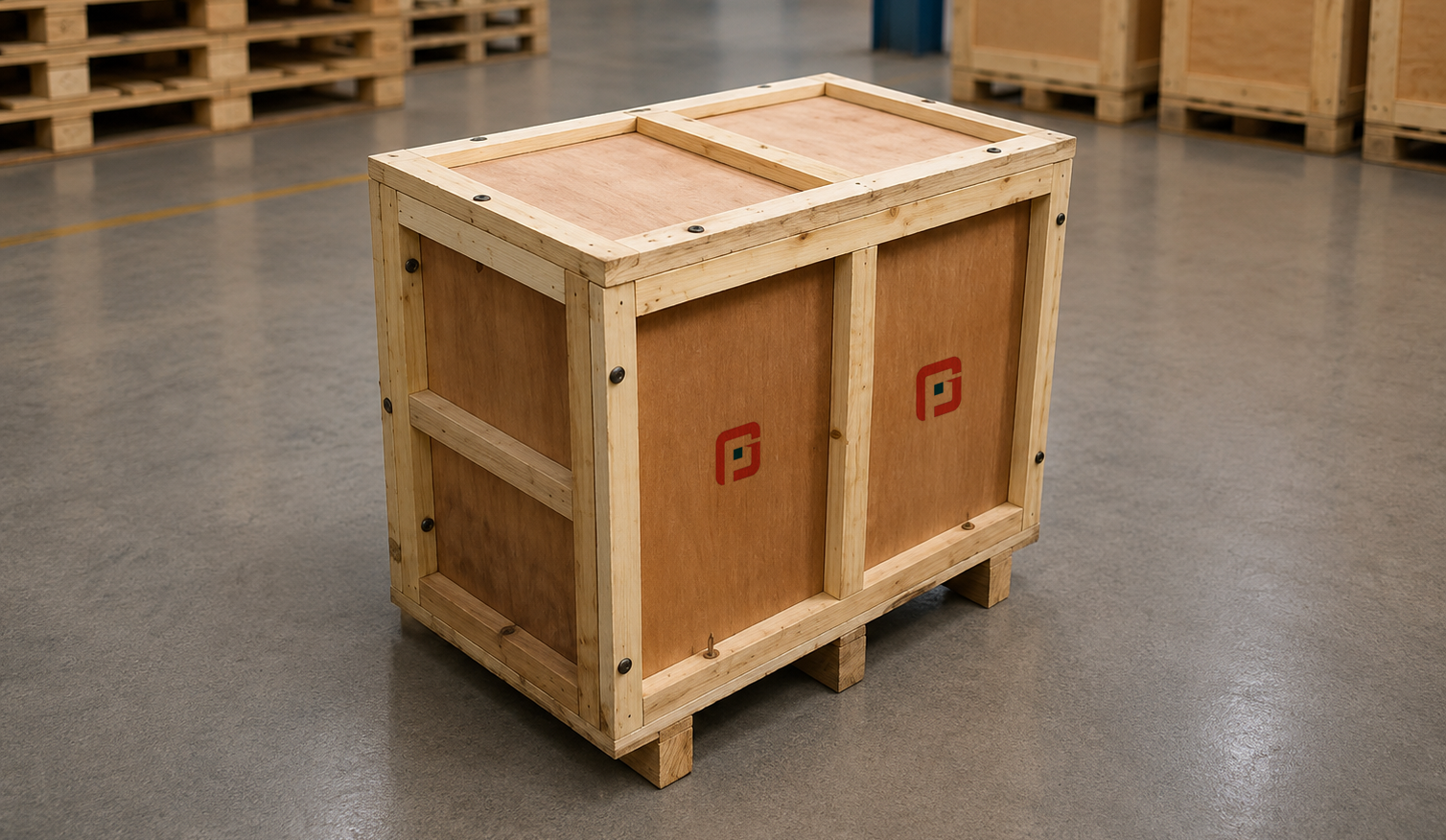
Heavy machinery, engineering components, and electrical equipment rarely fit into a standard carton. They are heavy, awkwardly shaped, and costly to replace, and they are handled many times before they reach the customer. A wooden box built around the product gives it structure, support points, and protection that lighter packaging cannot always provide.
An industrial wooden box is a made-to-fit packing case, built from timber or plywood, that protects heavy, high-value or irregular goods during storage and transport.
Gayatri Packaging is an industrial wooden box manufacturer based in Pune, Maharashtra. We supply custom-sized wooden packaging boxes for machinery, engineering, automotive, and electrical goods.
No two products load a box in the same way. A pump casing concentrates weight on a small footprint. A control panel is light but needs protection from knocks and moisture. A long shaft needs support along its length. That is why customized wooden boxes are designed from the product outward rather than picked from a fixed size chart.
pine, plywood, rubberwood or other timber, chosen for weight, strength, finish and the shipping route.
internal size follows the product's length, width and height plus the clearance needed for cushioning and bracing. Weight and centre of gravity decide how strong the frame and base must be.
battens, cleats, skids or runners spread weight and make forklift handling safe.
nails, screws or other fasteners are chosen to suit the wood, the load and whether the box must be opened and reclosed.
internal blocking, bracing, foam, wrapping, or moisture barriers keep the product from shifting or rubbing.
lids, access panels, markings, handling labels and special fixtures for oddshaped parts.
The material depends on weight, finish, and budget. These are ideas, not a list of every product we offer.
Solid wood boxes are made from timber. Solid wood boxes fit dense or high-value goods that need a rigid frame.
Plywood packaging boxes come from engineered panels with even surfaces. Plywood packaging boxes work well for enclosed boxes, lighter-to-medium loads, and goods that need a finish.
Pinewood boxes use pine, a softwood that's light for its strength and easy to work. Pinewood boxes are popular for machinery and industrial packing. Pinewood boxes fit industrial loads, with thickness and framing changed to match the weight.
Rubberwood boxes are made from rubberwood, a plantation timber used for boxes, crates, and pallets. Rubberwood boxes can carry loads heavier than many softwoods. Like raw wood, rubberwood boxes should be properly treated.
Heavy-Duty Wooden Boxes are a design level, not a material. Heavy-Duty Wooden Boxes use panels, stronger framing, and reinforced bases for heavy machinery and dense components. The limits of Heavy-Duty Wooden Boxes come from the box's engineering, not the label.
This wooden box manufacturing process follows these steps:
dimensions, weight, shape, fragility, and how the wooden box will be moved.
timber or plywood is chosen for its strength, finish, routing, and regulations.
size, base bracing, and lid style are set out before cutting.
panels, battens, and bases are cut to size. Fastened together.
size, fit, fastening, and finish are checked against the plan to ensure the wooden box meets the design.
marking, final fit of the wooden box, and loading arrangements are completed.
Each box is planned around the product it carries. These are the features buyers most often ask about; the exact set depends on your load and handling method.
standard or customized dimensions that follow your product's length, width and height.
pinewood, plywood or rubberwood, selected for weight, finish and budget.
battens, cleats and reinforced bases sized to the weight of the load.
skids or runners that allow safe lifting and moving.
supports that hold the product in place and reduce movement.
nails, screws or other fixings chosen for the wood and the load.
possible where the box construction and the load allow it.
fixed or removable, depending on whether the box needs to be reopened.
barrier film or desiccant, agreed at the quotation stage.
labels and instructions printed or marked on the box on request.
| Parameter | What it covers | What decides it |
|---|---|---|
| Material type | Pine, plywood, rubberwood or other timber | Weight, finish and budget |
| Box dimensions | Internal and external size, including clearance | Product size plus bracing and cushioning space |
| Panel thickness | Wall, lid and base thickness | Load, stacking and handling method |
| Load capacity | Safe working weight | Design, material, base and handling conditions; confirmed per job |
| Base construction | Skids, runners, bearers, forklift entry | Weight and how the box is lifted |
| Fasteners | Nails, screws or other fixings | Wood type, load, and whether the box reopens |
| Internal protection | Blocking, bracing, foam, wrapping | Product fragility and shape |
| Moisture protection | Barrier film, desiccant, VCI material | Route, transit time and product sensitivity |
The right box depends on the product's weight, shape, fragility and route. Common uses include:
An industrial wooden box manufacturer makes boxes for industrial use. They. Build packing cases from timber or plywood. These boxes are made to fit products that are heavy, valuable, or shaped in unusual ways. The process includes choosing the materials, deciding on the box size, planning the structure, putting the box together, and getting it ready for shipping.
To pick a wooden box manufacturer, ask to see examples of past work, especially work that matches what you need. Check where the factory is located. Make sure the supplier can build according to your drawings and exact sizes. Get the material type, thickness, and how the box will be built in writing before placing your order
The best material depends on the product being packed. Pine wood works well for kinds of machinery and industrial items. Plywood is ideal for enclosed boxes. Rubberwood or solid hardwood is better for denser loads. The weight of the item is a factor. The budget all help decide the right material.
Yes, wooden boxes can be made specifically for machinery. The box can be built to match the machine’s size and weight. Reinforced bases, added bracing, and lifting points can be included. You need to provide drawings and weight details so the box is designed correctly.
They can be strong enough if they are built for stacking and storage. Strength depends on the frame and how thick the panels are. The base design. When you ask for a quotation, tell us how you plan to stack the boxes and what the storage conditions will be.
To get a quotation for a box, you need to provide the product dimensions, the approximate weight, how many boxes you need, photos or drawings of the item, the shipping destination, and any special handling or protection needs.
The load capacity is based on the weight of the product, the design of the box, the type of wood or plywood used, and the condition of the base. How the box will be moved. It is not taken from a table. Each box is confirmed for its load capacity based on the specific job.